
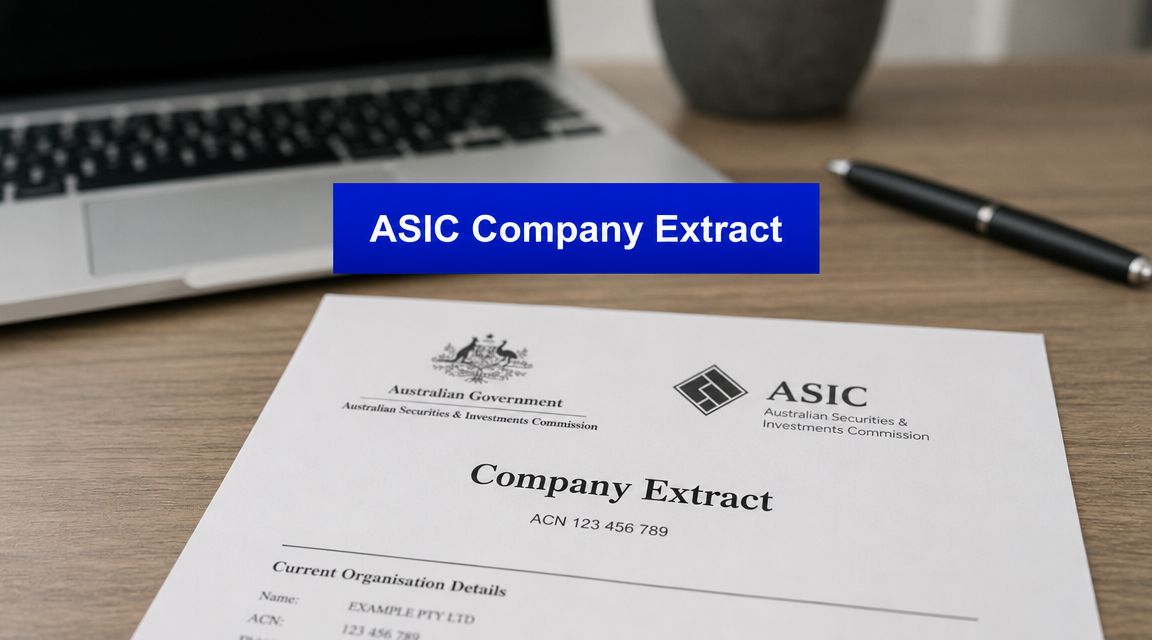
Many Australian business owners only look up a company after something feels off. A contract is ready to sign, a supplier wants upfront payment, or a lender asks for proof of who runs the entity. That’s usually when an ASIC company extract becomes important.
ASIC Company Extract: What It Is Cost & How to Get One in Australia is really about one practical question. How do you confirm you’re dealing with the right legal entity before money, risk, or liability moves your way? The answer often starts with ASIC records.
An ASIC company extract is an official document showing company information recorded by ASIC, including directors, registered office details and company status. Businesses commonly use ASIC extracts for due diligence, compliance checks and verifying trading entities before contracts or transactions in Australia.
Key Takeaways:
- ASIC company extracts provide official company information from ASIC’s registers.
- Current and historical extracts show different records, so the right choice depends on your risk question.
- Extracts are commonly used for due diligence before contracts, lending, onboarding, and disputes.
- ASIC search fees may apply because extracts are paid register products.
- Company status and director history can be reviewed to spot practical warning signs.
- Online access is generally available quickly through ASIC’s register system.
What Is an ASIC Company Extract
An ASIC company extract is an official record pulled from ASIC’s national registers for a company registered under Australian corporate law. It isn’t just a casual business lookup. It’s a fee-based statutory search result, and ASIC makes clear that some register information is free while specific search products attract legislated charges through its ASIC search fees guidance.
That distinction matters. A free register summary can help with a quick check, but it won’t always give enough detail for serious due diligence. If you’re verifying officeholders, checking company status, or confirming registration details before a transaction, the extract is usually the more reliable document to keep on file.
Why it matters in practice
When I explain this to clients, I keep it simple. If you’re about to sign a contract with a company, lend to it, appoint it, or rely on it, you need more than a trading name and a website. You need the legal entity details that ASIC holds.
Practical rule: If the risk is contractual, financial, or compliance-related, use the ASIC extract rather than relying on a basic search result.
This is also why it comes up early when people register a company in Australia. Once a company exists, its ASIC record becomes part of how others verify it.
What Information Does an ASIC Company Extract Show
An ASIC company extract is useful because it turns a vague company check into a document you can review line by line. The exact fields can vary by extract type, but the practical focus stays the same. You’re confirming who the entity is, whether it’s active, and whether anything in the record needs a closer look.
Core details you’ll usually review
- Company name and ACN
This helps confirm you’re dealing with the correct legal entity, not just a similar trading name. - Registered office
This is the formal address for company records and official notices. It matters if documents need to be served properly. - Principal place of business
This can help you compare what the company says publicly against what appears in its formal records. - Current officeholders
Directors and other current officeholder details are central to authority checks. If someone signs on behalf of the company, this is one of the first places to sense-check that authority. - Company status
This tells you whether the company is currently registered and trading as a live entity, or whether there’s a status issue that should stop you and prompt further review.
Where the extract becomes more valuable
For higher-risk matters, the extract can also help you test consistency. Does the company name on the contract match the company record? Do the directors listed in negotiations align with the ASIC record? Is the status current?
If a business can’t clearly match its contract details to its ASIC record, slow the transaction down.
That single step prevents a lot of avoidable problems.
ASIC Company Extract Types Explained
Choosing the wrong extract is one of the most common mistakes I see. The right document depends on whether you need a point-in-time check or a view of how the company has changed over time.
ASIC extract type comparison
| Extract Type | What It Shows | Common Use Case |
|---|---|---|
| Current extract | Current company details | Business verification |
| Historical extract | Past company changes | Due diligence |
| Relational extract | Related entities/directors | Investigation/compliance |
| Business name extract | Business name details | Trading name verification |
Check current ASIC guidance.
Current versus historical
The key difference is the data lineage. A current extract shows the company’s present details. A current-and-historical extract adds prior directors, former addresses, and historical changes since registration, as discussed in Sprintlaw’s explanation of ASIC company extracts.
That’s not just technical detail. It changes what you can detect.
- Use a current extract when you need to confirm the company’s present status, current officeholders, and current registered details.
- Use a historical extract when the company’s past matters to the decision, such as changes in directors, address churn, or other governance changes.
Other extract types
A relational extract is more useful when you’re investigating connections between entities and people. It tends to be more relevant in compliance reviews, disputes, and deeper background checks.
A business name extract serves a different purpose. It helps verify a trading name, but it isn’t the same as a company extract. That distinction matters because many businesses trade under a name that isn’t the company’s legal name.
If your concern is who you’re legally contracting with, start with the company extract, not the business name extract.
Why Businesses Use ASIC Company Extracts
Most clients don’t order an extract out of curiosity. They order one because a transaction has enough risk attached to justify proper verification.
A common example is supplier onboarding. A business is about to place a large order or pay a deposit. Before the money goes out, the accounts team wants to confirm the supplier is a real company, that the company status is live, and that the people signing the paperwork line up with the company record.
Common business uses
- Due diligence before contracts
This is often the cleanest use case. You verify the entity before signing, not after a dispute starts. For broader transaction reviews, that usually sits alongside a more complete due diligence process for business decisions. - Credit and payment risk checks
If you’re extending terms, paying a large deposit, or dealing with a new counterparty, a quick ASIC check can stop you from relying on incomplete or outdated information. - Legal and dispute preparation
If a matter turns contentious, the extract helps confirm the exact entity and recorded details. That matters before formal notices, debt recovery, or solicitor engagement. - Property and commercial transactions
Builders, developers, subcontractors, and consultants often need to verify the company behind the trading name before works start.
Businesses usually regret the extract they didn’t order, not the one they did.
How to Get an ASIC Company Extract
Getting the document is usually straightforward. The main issue is choosing the right extract and reviewing it properly after download.
Ordered process
- Search the ASIC register
Start with the company name or, better still, the ACN if you have it. The ACN reduces the chance of selecting the wrong entity. - Identify the correct company
Don’t rush this step. Similar names are common. Confirm you’ve matched the right legal entity before purchasing anything. - Choose extract type
Select a current extract for a present-day verification. Select a historical extract if past changes matter to your decision. If you’re tracing related parties or links, a roles and relationship style search may be more useful. - Review ASIC fees
Check the fee before purchase and make sure the extract matches the risk question. Paying for the wrong document wastes time more than money. - Purchase and download extract
ASIC states that these products are purchased online by credit card and delivered by email. If you prefer help with ASIC records and company maintenance, some firms also provide ASIC agent services for compliance support. - Review company details carefully
Don’t just save the PDF. Read it. Check the entity name, officeholders, addresses, and company status against your contract or onboarding file. - Store records securely
Keep the extract with your compliance or transaction records. It’s much easier to justify your due diligence when the document is already on file.
What works and what doesn’t
What works is ordering the extract close to the transaction date and reading it with a purpose.
What doesn’t work is downloading it, filing it away, and assuming the check is done.
How Much Does an ASIC Company Extract Cost
ASIC’s official register guidance states that for Australian companies, the current company extract costs A$10, the current and historical company extract costs A$20, and the roles and relationship extract costs A$23, with online purchase and email delivery available through the ASIC company and organisation registers page.
Cost trade-offs
The practical question isn’t just price. It’s whether the cheaper extract answers the underlying risk question.
If you only need a current status check, the current extract is usually enough. If you need to understand changes in directors, addresses, or other historical movements, paying for the historical version is usually the better compliance decision.
Third-party providers may package searches differently, but the safest baseline is to start with the ASIC fee schedule and product descriptions. Check current ASIC guidance.
Worked Example of an ASIC Extract in Action
A property developer is about to appoint a subcontractor on a new project. The quote looks fine, the trading name is familiar, and work needs to start quickly. On the surface, there’s no obvious issue.
Before signing, the developer orders a historical company extract rather than a current extract. That choice matters because the concern isn’t just whether the company exists today. The primary concern is whether the company record shows instability that could affect delivery, payment disputes, or contract enforcement.
What the extract changes
The historical extract reveals director changes and an overdue company status issue. That doesn’t automatically mean the subcontractor can’t perform. But it does change the risk profile.
The developer now has a reason to pause and ask better questions:
- Why did the directors change?
- Has the company’s governance been stable?
- Does the overdue status point to weak compliance habits?
- Should contract terms, deposits, or payment staging be tightened?
The value of the extract isn’t that it makes the decision for you. It gives you documented facts before you commit.
In practice, that can mean stronger contract controls, more careful onboarding, or a decision to choose another subcontractor altogether. Either outcome is better than discovering the problem after works commence.
Common Mistakes When Ordering ASIC Extracts
Most errors happen because people move too fast or assume the free information is enough.
Mistakes and quick fixes
- Mistake: Ordering the wrong extract type.
Quick Fix: Confirm whether you need current or historical company information before you buy. - Mistake: Using unofficial search websites.
Quick Fix: Start with ASIC’s register products so you know what record you’re relying on. - Mistake: Ignoring historical changes.
Quick Fix: If the company’s past could affect liability, control, or contract risk, order the historical extract. - Mistake: Confusing business names and companies.
Quick Fix: Check whether you’re verifying a trading name or the legal company entity. They are not the same thing. - Mistake: Missing deregistration warnings or status issues.
Quick Fix: Review company status early, before funds are paid or contracts are signed. - Mistake: Treating the extract as a filing exercise.
Quick Fix: Compare the extract against the contract, invoice details, and the people you’ve been dealing with.
The trap to avoid
The biggest practical error is assuming that “found online” means “verified”. It doesn’t.
Your ASIC Company Search Checklist
Use this as a simple pre-contract checklist for any meaningful transaction.
Checklist
- Company name verified
- ACN confirmed
- Correct extract selected
- ASIC fees checked
- Director details reviewed
- Company status checked
- Historical records reviewed
If the transaction involves lending, long-term supply, major deposits, or disputed authority, add one more internal check. Ask whether the extract answers the core risk question, or whether you still need legal or accounting review.
A good checklist doesn’t slow business down. It stops preventable mistakes.
Australia-Specific Compliance Considerations
ASIC extracts sit inside a broader Australian compliance framework. ASIC’s public register system supports transparency around registered entities, officeholders, and company status. For businesses dealing with Australian companies, checking that record is part of basic due diligence, not an optional extra.
What matters locally
Under the Australian corporate framework, director disclosure and company record accuracy matter because counterparties rely on those records when assessing authority, continuity, and legal identity. That’s especially important where deregistration status, overdue compliance, or changes in officeholders affect a commercial decision.
There are also limits. ASIC records are useful, but they don’t tell you everything about a company’s financial strength, trading conduct, or contractual reliability. Privacy rules also mean not every piece of background information will be available through public searches.
This issue often shows up in transactions tied to lending, settlements, and property. If you’re dealing with a property matter after finance has already been in place, guidance on a mortgage discharge for Australian homeowners can also help explain how formal records and legal steps fit together at settlement stage.
Check current ASIC guidance.
Frequently Asked Questions
What is an ASIC company extract
It’s an official document from ASIC’s registers that shows recorded company details. Businesses use it to verify a company before contracts, payments, compliance checks, or disputes.
How do I get an ASIC company extract
You search the ASIC register, identify the correct company, choose the extract type, pay online, and receive the document by email.
How much does an ASIC company extract cost
ASIC lists separate fees for different extract types. The official amounts are covered earlier in this guide, and you should check current ASIC guidance before ordering.
What is the difference between current and historical extracts
A current extract shows present company details. A historical extract adds prior changes, which is useful when you need to review director history, former addresses, or other past company records.
Can I see company shareholders on an ASIC extract
Some company record details can appear on extract products, but the best approach is to choose the extract that matches the information you need and review the product description before purchase.
Is an ASIC company extract public
It’s publicly accessible as a paid search product through ASIC’s register system. That doesn’t mean all company information is free. Some ASIC information is free, while extracts are paid products.
Can I search ASIC for free
Some ASIC register information is available without payment. For fuller company verification, businesses often need a paid extract rather than relying on the free summary alone.
What does deregistered company status mean
It means the company is no longer registered as an active entity. If you see a deregistration issue, stop and review the transaction carefully before proceeding.
Do accountants use ASIC extracts
Yes. Accountants commonly use them for due diligence, company verification, compliance file checks, lending support, and record matching.
Can I get ASIC extracts online instantly
The process is generally online and designed for quick access, with payment completed by credit card and delivery by email. Actual timing can depend on the system and the search product selected.
Book a consult with Nanak Accountants and Associates if you need help choosing the right ASIC search, reviewing company records, or handling broader compliance and due diligence work. Call 1300 NANAK TAX (626 258).
This article provides general information only for Australia. It doesn’t consider your objectives, financial situation or needs. ASIC search rules, fees and company information requirements can change, check current ASIC guidance and seek professional advice before acting.
